
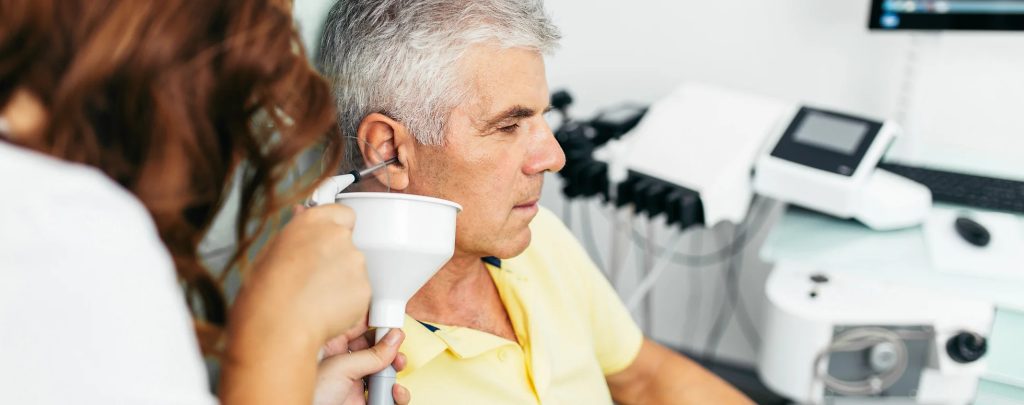
Ear wax is something most people rarely think about until their ears suddenly feel blocked. You may notice sounds becoming muffled, conversations becoming harder to follow or a sensation of pressure inside your ear. When this happens, one obvious question is: why does ear wax build up in the first place?
Ear wax is completely natural and serves an important purpose. It helps protect the ear canal by trapping dust, debris and other particles while also helping to maintain the skin inside the ear. Normally, old ear wax gradually moves towards the entrance of the ear and leaves naturally.
However, this process does not work perfectly for everyone. Some people naturally produce more wax, while others have ear canals or everyday habits that make it harder for wax to move out. In these situations, wax can gradually accumulate and become impacted.
Understanding the possible causes can help you look after your ears more appropriately and recognise when professional ear wax removal may be more suitable than trying to remove the wax yourself.
At Staffordshire Microsuction, we provide professional microsuction and ear wax removal in Staffordshire, including treatment from our Stoke-on-Trent clinic and mobile appointments for eligible patients.
1. You Naturally Produce More Ear Wax
One of the simplest explanations for excessive ear wax is that your ears simply produce more of it.
Ear wax production varies considerably between individuals. Some people may go for years without experiencing significant build-up, while others find that their ears become blocked relatively frequently.
Producing more wax does not necessarily mean that something is wrong with your ears. Ear wax is part of the ear’s natural protective system. The problem occurs when the amount being produced is greater than the amount that can naturally leave the ear canal.
Over time, this can result in a compacted mass of wax.
If you regularly experience this problem, it can be useful to pay attention to how often your symptoms return rather than waiting until your ears become completely blocked. Our existing guidance on how often ear wax should be removed can provide further information about why removal frequency can vary between individuals.
The appropriate approach depends on the person, their symptoms and the condition of their ears. If you repeatedly experience significant build-up, a professional assessment can help determine whether ear wax is actually responsible for your symptoms.
2. The Shape of Your Ear Canal Can Make a Difference
Another factor that is often overlooked is the physical shape and size of your ear canal.
Ear canals are not identical. They can vary in width, shape and curvature from one person to another. If an ear canal is particularly narrow, curved or has another anatomical characteristic that makes natural wax movement more difficult, wax may have a greater tendency to remain inside.
This can mean that even someone with completely normal wax production experiences repeated build-up.
The ear has its own natural cleaning process, but that process depends partly on wax being able to move outwards. If the wax becomes trapped deeper within the canal, it can gradually accumulate.
This is one reason why repeatedly trying to clean inside your ears may not solve the underlying problem. The issue may not be that your ears are “dirty”; it may simply be that wax is not moving out as efficiently as it should.
A professional examination can help determine whether there is a significant build-up and whether microsuction or another appropriate form of ear wax removal is suitable.
3. Cotton Buds Can Push Wax Further Inside
Many people use cotton buds because they believe they are cleaning their ears. In reality, putting a cotton bud into the ear canal can have the opposite effect.
Rather than removing all the wax, a cotton bud can push some of it further towards the eardrum. Repeated use can gradually compact wax and make it more difficult for the ear to naturally move it towards the entrance.
Cotton buds can also irritate the delicate skin lining the ear canal.
This is why professional ear-care advice generally focuses on avoiding objects being inserted into the ear canal. Cleaning the outside of the ear is very different from attempting to clean deep inside it.
If you have already been using cotton buds and your ears now feel blocked, there is no need to panic. However, continuing to push objects into the ear is unlikely to resolve the problem.
If symptoms suggest that wax has become impacted, ear wax removal in Stoke-on-Trent may provide a safer way to assess and address the blockage.
You can also read Staffordshire Microsuction’s existing article, Why DIY Ear Wax Removal Can Do More Harm Than Good, for more information about the risks associated with attempting to remove ear wax yourself.
4. Hearing Aids Can Contribute to Wax Build-Up
Hearing-aid users can sometimes experience more noticeable problems with ear wax.
A hearing aid sits in or around the ear and can interfere with the normal movement of wax towards the outer part of the ear canal. Depending on the type of hearing aid and the individual, wax may therefore accumulate more readily.
Wax can also affect the performance of a hearing aid.
For example, a person may notice changes in sound quality, reduced amplification or feedback from the device. This does not automatically mean that the hearing aid itself has developed a fault.
Sometimes ear wax is contributing to the problem.
If you wear hearing aids and regularly experience wax build-up, it is worth having your ears assessed rather than attempting to remove the wax with cotton buds or other objects.
Staffordshire Microsuction’s professional ear-care service can assess the ear canal and determine whether wax removal is appropriate. Microsuction is also listed by the business as a treatment option for patients with hearing aids.
5. In-Ear Headphones and Earbuds May Affect Wax Movement
Modern listening habits can also play a role in how noticeable ear wax becomes.
In-ear headphones and earbuds sit directly within the ear canal. For people who use them frequently, this can potentially interfere with the natural outward movement of ear wax.
This does not mean that everyone who uses earbuds will develop excessive wax. Many people use them without experiencing any problems.
However, if you already tend to produce a lot of wax, frequent use of in-ear devices may make blockages more noticeable or contribute to wax remaining inside the canal.
It is sensible to keep earbuds clean and avoid inserting them further into the ear than necessary. If you experience persistent blockage, muffled hearing or discomfort, don’t assume that simply cleaning your earbuds will solve the issue.
The important question is whether there is actually a build-up inside the ear.
A professional ear examination can help establish what is causing your symptoms and whether professional ear wax removal is appropriate.
6. Age Can Affect the Way Ear Wax Behaves
Changes associated with ageing can also influence ear wax.
As people get older, ear wax can become drier or harder in some individuals. The natural movement of wax out of the ear may also become less efficient.
This means that older adults can sometimes experience more persistent or compacted wax.
For someone who already has difficulty hearing, an additional blockage caused by ear wax can be particularly frustrating. It may make conversations, television or everyday sounds more difficult to hear clearly.
Older people may also find travelling to an appointment more difficult, particularly if they have mobility problems.
For eligible patients, Staffordshire Microsuction offers mobile ear wax removal appointments, allowing professional ear-care treatment to take place at home. The business currently states that mobile visits are available on Thursdays within a 20-mile radius.
This can be particularly useful for elderly patients, people with reduced mobility and those who find travelling to a clinic difficult.
7. Previous Ear Irritation or Attempts at Cleaning Can Make Things Worse
Another possible reason for repeated problems is frequent interference with the ear canal.
The skin inside your ear is delicate. Repeated scratching, inserting objects or attempting to remove wax manually can irritate the area.
Once someone notices a small amount of wax, they may try to remove it. If the attempt pushes some of the wax deeper into the canal, they may then feel that the ear is even more blocked. This can lead to another attempt at cleaning, creating an unhelpful cycle.
The better approach is to avoid repeatedly interfering with the ear canal.
Ear wax is not something that needs to be completely removed simply because it is present. It has a protective role. The aim of professional treatment is to remove problematic or impacted wax when appropriate, rather than treating normal ear wax as something that must always be eliminated.
If your ear feels blocked after repeated attempts to clean it, professional assessment can help determine what is actually happening.
What Are the Signs That Ear Wax Has Built Up?
Not everyone with ear wax build-up will experience exactly the same symptoms.
Possible signs can include:
- A blocked sensation in one or both ears
- Muffled or reduced hearing
- A feeling of pressure
- Ear discomfort
- Ringing or buzzing sounds
- Difficulty hearing conversations clearly
- Problems using hearing aids effectively
However, these symptoms do not automatically mean that ear wax is responsible.
For example, changes in hearing can have several possible causes. This is why an examination is important before assuming that removing wax will solve the problem.
Staffordshire Microsuction’s existing information explains that patients may sometimes believe wax is causing their symptoms when examination reveals little or no significant blockage.
If you are unsure what is causing your symptoms, professional assessment is preferable to repeatedly attempting home treatment.
Does Ear Wax Always Need to Be Removed?
No.
Ear wax is a natural and useful substance, so its presence does not automatically mean that it needs to be removed.
The concern is usually when wax becomes excessive, impacted or starts causing symptoms.
For some people, the ear naturally clears wax without assistance. Others may experience repeated build-up and require professional removal from time to time.
The frequency can therefore vary considerably between individuals. Factors such as natural wax production, hearing-aid use and the characteristics of the ear canal can all influence how often someone experiences problems.
The important thing is not to remove ear wax unnecessarily.
If you are experiencing symptoms that could be caused by impacted wax, an appropriate examination can help establish whether treatment is needed.
When Should You Consider Professional Ear Wax Removal?
If your ear feels persistently blocked, your hearing has become noticeably muffled or you are experiencing recurring wax problems, it may be time to seek professional advice.
Professional ear wax removal in Staffordshire can provide an opportunity for your ears to be examined before treatment is carried out.
At Staffordshire Microsuction, the available services include microsuction and warm-water irrigation. The clinic explains that microsuction uses a delicate suction device to carefully remove wax from the ear canal, while warm-water irrigation uses a controlled flow of warm water to help remove build-up.
The most appropriate approach depends on the individual’s circumstances and the condition of the ear.
If you are considering treatment, you can learn more about the clinic’s available ear wax removal services before booking an appointment.
Why You Should Avoid Trying to Remove Impacted Wax Yourself
When your ear feels blocked, it can be tempting to reach for a cotton bud, ear pick or another household object.
However, trying to physically remove wax from inside the ear can push it deeper, irritate the ear canal or potentially cause injury.
Home remedies also aren’t suitable for every situation.
If you have significant symptoms or are unsure whether wax is responsible, it is better to have your ears assessed rather than repeatedly trying to solve the problem yourself.
This is particularly important if you have a history of ear problems, hearing difficulties or other concerns about the condition of your ears.
Staffordshire Microsuction’s existing article on when not to remove ear wax at home provides additional guidance on situations where professional advice should be considered.
Professional Ear Wax Removal in Staffordshire
Ear wax build-up can happen for many different reasons, and sometimes there is no single obvious cause.
You may naturally produce more wax, have an ear canal that makes natural wax movement difficult, use hearing aids or in-ear headphones, or have developed build-up after repeatedly trying to clean your ears.
The important thing is to remember that ear wax itself is normal. Problems generally arise when it accumulates, becomes impacted or starts affecting your hearing or comfort.
If you are experiencing persistent symptoms, Staffordshire Microsuction provides professional ear wax removal in Stoke-on-Trent and across Staffordshire. The clinic offers microsuction and warm-water irrigation, with mobile appointments also available for eligible patients.
Rather than continuing to put objects into your ears or trying to remove stubborn wax yourself, professional assessment can help establish whether wax is actually causing the problem and whether removal is appropriate.
For more information about microsuction in Staffordshire, the available ear-wax removal services and appointment options, visit Staffordshire Microsuction’s website or contact the clinic directly.